






Chip Music
-
Chip Music, Experimental, Indie Music
Chime Sharp Launching in June, Full Artist List Details
June 13, 2016 | Shawn Sackenheim | Comments Off on Chime Sharp Launching in June, Full Artist List Details Share this


When we last checked in with Chime Sharp it was racing towards its Kickstarter goal last July. Having been fully funded the game was launched on Steam Early Access in November and will see its final release on Steam by the end of this month. Today, publisher Chilled Mouse and Chime co-creator, Ste Curran, have announced the full list of artists whose music will be at the core of the game’s fifteen stages. The list looks to hit a good mix between electronic and acoustic styles with contributions from the following artists:
- Kavinsky
- CHVRCHES
- Steve Reich
- Los
- Chipzel
- Andy Hung
- Message to Bears
- Timothy Schmalz
- Magic Sword
- Shirobon
- Noveller
- Haiku Salut
- Luc Grey
- A Mote of Dust
- Symbion Project
For those that don’t remember the 2010 original, the team sums it up perfectly as a “crossover between a music sequencer and Tetris”. Utilizing a sweeping time bar Chime hits that same hypnotic, rhythmic euphoria as the classic music puzzler Lumines as players slot pieces into formations to clear them from the screen in time with the music.
Chime Sharp offers new modes, new music and a sharp (whoops, didn’t see that coming) new visual presentation to bring its classic gameplay up to date.
-
Chip Music, Indie Music, Japanese, Reviews
Collaborative Fan Album, Fire Pro M: Volume One (Review)
May 12, 2016 | Shawn Sackenheim | Comments Off on Collaborative Fan Album, Fire Pro M: Volume One (Review) Share this
Sometimes you stumble upon a fascinating fandom, dip a tentative toe into their murky waters and then seize up in uncertainty, unsure if you’re ready for the plunge. Maybe it’s the world of Persona or a MOBA but for me it was Fire Pro Wrestling. A couple years ago I picked up Fire Pro Wrestling Returns because it was a PlayStation 2 game with sprites and that seemed uncommon. I’d heard the name and seen some scuzzy VHS dubs of Japanese wrestling in the 90’s but that was all the exposure I had. Bewildered by the game’s complex mechanics I turned to the internet and that’s when my toe hit the chilly surface of the Fire Pro waters.
First appearing in 1989 and with a library of 30+ titles steeped in the mystery of Japanese Pro Wrestling — saying nothing of the fan communities that have grown around them — I found myself frozen. “It wasn’t a lake,” I repeated the words of Alan Wake, “it was an ocean.” I shied away and haven’t invested myself in the game since but every now and then I think about the series. So when I was perusing Bandcamp last week and saw Fire Pro M: Volume One I couldn’t help but take a tentative look inside.
The album is a re-release of a 2009 collaboration from various Fire Pro communities and boldly states that it’s “for Japanese wrestling game enthusiasts by Japanese wrestling game enthusiasts”. Despite that warning and the numerous names I’d not heard of — SonnyBone, Jason Blackhart, DJKM, RapidFire, Wackydeli, R’lyeh Liberation Front, OctoberRaven, Wonderland — I continued listening. I don’t think I understand Fire Pro any better but I’ve now spent more time with this album than any of the games in the franchise and think it’s worth a listen: fan, fanatic or not.
-
Chip Music, Game Music
Frank Klepacki’s 8-Bit Armies OST Out Now
April 28, 2016 | Shawn Sackenheim | Comments Off on Frank Klepacki’s 8-Bit Armies OST Out Now Share this
If there’s one thing Frank Klepacki knows how to compose for, it’s real-time strategy games. He’s touched some of the biggest, best and most recent entries in the genre, the latest of which is 8-Bit Armies from former Westwood Studios members at Petroglyph Games. It’s the classic gameplay of Command & Conquer painted in vibrant voxel style over which Klepacki plies his familiar hard rock and electronic stylings to some new sounds.
Immediately obvious are the tracks that feature flourishes of chiptune but there’s a general darker and harder electronic vibe over C&C’s military rock sound throughout. Breakbeats, those chippy synth leads and just a hint of dubstep distortion play over his familiar brooding and driving bass. It adds just enough newness to the familiar feel of a classic to hit you right in the nostalgic pit of your heart.
The game is out now and available from all your favorite digital storefronts (Steam, GOG and Humble Bundle) for 10% off the asking price of $14.99. The soundtrack is also on sale at a discount over at Steam or bundled with 8-Bit Armies directly from Petroglyph Games. The 9-track album runs with just over 30 minutes of music and is priced at $3.99 including the following songs:
- Blockhead
- More Byte
- Square Off
- Back For More
- Base Builder
- Check My Creds
- Pixelated
- Oh Snap
- Battle Bit
-
Chip Music, Game Music, Reviews
Charlotte Seeker – Games on Cassette (Review)
April 19, 2016 | Shawn Sackenheim | Comments Off on Charlotte Seeker – Games on Cassette (Review) Share this
Charlotte Seeker is an upcoming game from Bearcowboy that has narrowly dodged some some of its own setbacks just like the bullet-weaving heroine. After an unsuccessful Kickstarter in 2014 and a slipped release in 2015, the tiny team has forged ahead through Steam Greenlight and are now aiming to launch in Q2 of this year.
Described as a 16 bit-inspired, lo-fi melange of twin stick shooters and roguelikes, Charlotte Seeker wears its influences on its sleeve. Bearcowboy sites The Binding of Isaac, The Legend of Zelda: A Link to the Past and Resogun as inspiration behind its brand of mesmerizing “bullet heck” gameplay and vibrant pixelart visuals. Accompanying that is Spencer Riedel’s soundtrack that’s full of boppin’ chiptune interwoven with modern synths all chopped up with break beats, acoustic drums and thick bass. Just how the action puts its own spin on familiar gameplay, the music also mixes old and new. The combination evokes some very specific old console sounds — at least for me — while peppering everything with fresh melodies and unexpected rhythms.
The first track, “Menu Theme”, was designed to ease players into both the listening and playing experience. This is as calm as the album gets and it opens with pulsing bass and a deconstruction of the game’s main theme that wafts in and out as the layers build. Things drop out around 2:00 into a muffled drum beat that finally ushers us into the proper tune with dueling voices of tinny and grungy synths. It’s a perfect introductory track and things only get more interesting from there.
The next track, “Pistons”, sings with the same high synth voice but gets a whole new feel to evoke the engine room that it accompanies. Riedel adds a hint of Latin influence that can be heard in the opening percussion and the crisp syncopated drum and cymbal throughout. Just about halfway through a wonderful guitar solo leaps into the mix and is matched by the main synth. The pair lead us right into a breakdown of chippy drums before a new guitar solo wraps around for one final, glorious refrain. The song gets a great remix later in the album on the track “Turbines” where it accompanies a boss battle with double speed, grungier guitars and layers of extra harmonies.
Between “Pistons” and “Turbines” is the funky track “Cogs” which Riedel says is a “love letter to two early game music memories” from Spyro the Dragon and the Sega Genesis. Sure enough, the plodding little melody at the beginning reminds me of Spyro’s earliest adventures but quickly picks up speed with fast synth melodies. These are punctuated through the rest of the song by both shrill and crunchy sounds that thoroughly remind me of the Genesis’ unique sound.
The track “Thorns” maintains the album’s signature sounds with high synths and crunchy drums but takes a stylistic turn towards surf rock. The simple bass and lead synths at the beginning initially remind me of the Game Boy Advance hardware but once the choppy drum samples and guitar jump in it feels wonderfully unique. Another mid-track break simmers back down to the main synth before exploding with even choppier breakbeat drums and a cacophonous swell of melodies.
“Nettles” is spot on boss battle music from the get-go with its descending run and jumpy synth melody. It’s punctuated by droning backing sounds that also remind me of the Game Boy Advance and more punchy, syncopated drumming. Midway through is one of those great musical flourishes that always inspires me to make brash, boneheaded attacks when I’m playing a game. In this case it’s another out-of-nowhere descending run of main and bass synths that pops back into full swing just before the loop point.
The layers of synths in “Squids” all have that wonderful tremolo waver that calls to mind Amiga cracktros I’ve posted about before. It’s a unique sound for what is one of the game’s desert levels and it gets stronger after the intro when the pounding drums thump in. At the midpoint a pair of scratchy, abrasive synths pipe up adding to the harsh and chaotic sound of the track.
“Wind” is another song set in the game’s desert environment that opens with plucky synths and remind me of the NES. Before you have time to place the sound though, that crunchy guitar and percussion, with a nonstop cowbell, crash onto the scene, repeating the synth line. The contrast of chiptune and acoustic instruments is particularly strong here as the two voices take turns in the lead while those persistent drums move everything along at a great speed.
Setting the stage for one of the game’s wintery levels, “Snow” opens with fast drum and bass percussion and a low end synth that is quickly joined by a sawing guitar. The slippery sensation of ice and cold comes from the dual pair of frantic and twinkly synth leads. The pair echo trembling arpeggios back and forth and right on through the thumping bass break at the midpoint and back around for a final loop.
“Frostbite” is the tune used in the game’s trailer and, fittingly enough, it was the first thing I heard when I started this review. While this edited version now accompanies a boss battle and appears almost at the end of the album I’ve come to think of it as the game’s theme. It incorporates all the sounds we’ve heard elsewhere and has a bombastic sound that’s perfect for a theme song. The opening bass synth is backed up by chippy percussion that reminds me a bit of Bionic Commando on the NES. Seconds later the familiar high synth voice and acoustic drums burst in with a brash staccato theme that swells with the scratchy background synths of a Genesis game. The whole thing crescendos into a solo by that familiar high synth, echoed back by yet higher voices before flowing into a quick loop.
The final track I want to highlight is “Credits”. Calling back to the tune established on the very first track, and the game’s main menu screen, it’s a great wraparound with enough variety to sound familiar but new. The increases in speed and pitch give the song that triumphant “you beat the game” vibe and the bass keeps your head bopping along.
The rest of the album is honestly just as good as the tracks I picked to explore. In fact, it was hard not to write up every single song because they all have something unique worth hearing. The full album even throws in an extra eight tracks of demo tunes, alternate takes and unused material that are fun to explore after hearing the main playlist a few times. Accompanying the game or on its own, Charlotte Seeker – Games on Cassette is a wonderful, re-listenable aural spectacle. If you’re love of chiptune is waning or if you’re just looking for something fresh and exhilarating I definitely suggest taking a listen.
-
Chip Music, Experimental, Game Music
April Fool’s Joke turns into Nightcore Remix Album
April 5, 2016 | Shawn Sackenheim | Comments Off on April Fool’s Joke turns into Nightcore Remix Album Share this

The best kinds of April Fool’s gags are the ones that wind up becoming real things. The Mega Man tie and the Tauntaun sleeping bag spring to mind but this year’s gag-to-grab is VGM NXC 001. Released by GameChops, the 17-track album is the work of “international video game remixing super group” Party Members. The guilty parties behind the music include DJ Cutman, Ben Briggs, Mega Flare, Grimecraft, RoBKTA, DJ Mykah, Ralfington and many more.
Leading up to the release several of the artists renounced their chiptune and electronic heritage in favor of nightcore, the increasingly misinterpreted act of speeding up electronic tracks close to 200 beats per minute. However you feel about the sub-genre the album is worth a listen offering spastic remixes from Final Fantasy, Cave Story, Undertale, Animal Crossing, Katamari Damacy and more.
VGM NXC 001 is available on Bandcamp for whatever price you want to pay or you can listen on SoundCloud or check out the entire album in this hyper-bouncy YouTube video. Did you come across any other noteworthy April Fool’s game music or remixes over the weekend? Let us know in the comments below.
-
Chip Music, Game Music, Music Production, Reviews
Rytmik Ultimate: A Powerful Tool for Creating and Sharing Your Own Electronic Music (Review)
February 27, 2016 | Sebastian Urrea | Comments Off on Rytmik Ultimate: A Powerful Tool for Creating and Sharing Your Own Electronic Music (Review) Share this

Rytmik Ultimate is a new app from developer CINEMAX for creating and sharing your own music. Available now for Nintendo 3DS, iPad, and Windows (through Steam), it’s a music workstation that provides a library of sounds to work with and gives you a wide range of tools and settings to customize and tweak everything to your own liking. You can use it to write your own music, create covers and arrangements of your favorite tunes, or even to create music clips or tracks for use in your other works or performances. Read on to learn more!
-
Chip Music, Events
Know Your MAG 2016: I Fight Dragons
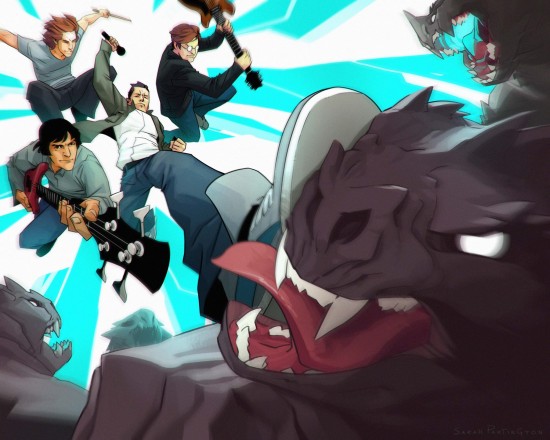
For this edition of Know Your MAG, we’re featuring the Chicago-based chip-pop-rock band known only as I Fight Dragons. The band, comprised currently of Brian Mazzaferri (lead vocals, rhythm guitar, Gameboy), Hari Rao (Bass), Packy Lundholm (lead guitar, harmony vocals) and Chad Van Dahm (Drums) combine chiptunes with their own rock/pop style to create their signature sound. (Also featuring past members Laura Green, Mike Mentzer, Dave Midell and Bill Prokopow throughout the band’s tenure.)
Currently the band sports two full-length albums; 2011’s KABOOM!, and 2014’s The Near Future” which they self-released after raising over $100,000 on Kickstarter through their “Project Atma” project. They also boast two EPs; two EPs, 2009’s Cool Is Just a Number and 2010’s Welcome to the Breakdown.
I Fight Dragons also sports several pop culture notables, having their music featured in commercials for Big Brother and NCIS. As such, they have a following to match, and will be hitting the Potomac ballroom on Saturday the 20th at 10pm to blow the concert hall away at this year’s MAGFest. (Perhaps as robots; we’re not privy to that information)
Oh, and they are DEFINITELY NOT secret agent super-spies. DEFINITELY NOT. So don’t ask.
Or at least, that’s what they tell us.
| « Next Entries | Previous Entries » |
|---|
Join Us Online Or Log in


